
Noxious Weed List
General Notice to Destroy Weeds
By Order of the Board of Boundary County Commissioners
Notice is hereby given that, pursuant to the Idaho Noxious Weeds Law, Section 22-2408, Idaho Code, to every person who owns or controls land in Boundary County, that noxious weeds standing, being or growing on such lands shall be destroyed or eradicated by effective cutting, tillage, pasturing or treating with herbicides or other effective methods, or combination thereof approved by the County Weed Superintendent, as often as may be required to prevent the weed from blooming and maturing seeds, or spreading by root, root stalks, or other means. Upon failure to observe this notice, the County Weed Control Superintendent is required to proceed pursuant to the law and have weeds destroyed by such method as he or she finds necessary, the expense of which shall constitute a lien and be entered as a tax against the land, and be collected as other real taxes are collected or by other means as provided by law.
The following weeds are hereby officially designated and published as noxious, as per the authority vested in the Commissioner of Agriculture as per Section 22-2404, Idaho Code, and the Board of Boundary County Commissioners as per section 22-2405, Idaho Code:
Idaho’s 67 Noxious Weeds designated noxious by state law. The spread of these weeds and the damage they do to Idaho agriculture can be lessened through proper identification and control.
* present in Boundary County
Noxious Weeds of Boundary County
St. John’s Wort (Klamathweed or goatweed)
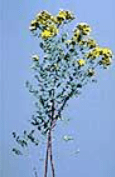
A European perennial discovered in the Clearwater and Salmon River drainages in the 1930s. In 1950, over 600,000 acres were known in the state of Idaho. In the mid-1990s, various companies contracted for acreages of St. John’s Wort to be utilized for the manufacture of Prozac … but the ensuing research led to stronger and more disease-resistant varieties. Thanks a lot! St. John’s Wort has numerous bright yellow flowers and grows to three feet in height. There are fair bio-controls, but control is best achieved with 2,4-D and Escort.
Common Tansy
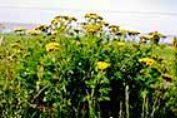
Common tansy is another escaped ornamental and European perennial. It can grow to a height of six feet, choking out other native vegetation. It is poisonous and possibly causes abortion in livestock, although most animals typically avoid it. It’s medicinal properties have been touted since the middle ages, supposedly helping gout and jaundice, but even small doses may lead to hemorrhage, convulsions and death from paralysis of the heart and lungs. There are no known bio-controls. The best control is through the use of herbicides; clopyralids, chlorsulfuron, picloram or dicamba in conjunction with 2,4-D.
Houndstongue
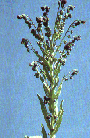
Houndstongue is an Asian biennial that is a serious problem to the livestock industry because animals transport its seeds in their hair. It grows an erect stem up to three feet tall and has an extensive root system up to four feet in depth. It is this root system which makes it so competitive and especially difficult to control during its second season. First year plants are easily controlled with 2,4-D, but second year plants require picloram or dicamba and 2,4-D.
Hawkweeds
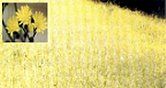
The ancient Greeks thought hawks used the sap of hawkweeds to strengthen their eyesight, but they are now considered one of the most serious noxious weeds in the Pacific Northwest, where about 20 of the hundreds of species in the Old World, where the plant originated, exist.
Hawkweeds resemble dandelions and spread prolifically, by seed, stolons or rhizomes, especially in poorer, uncultivated soils, most often in meadows or pastureland, which should be treated early in the season with picloram or dicamba mixed with 2,4-D. Left untreated, hawkweeds force out useful plant species, increasing the cost of livestock production.
Spotted Knapweed
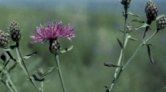
A European native, Spotted Knapweed is one of the most widespread of the noxious weeds in Boundary County and throughout the state. Each plant produces approximately 25,000 seeds, which are spread by wind, animals and people. The weed grows to about three feet in height.
Several biological control agents are available and provide fair control, including root boring beetles and moths, 2 seed head gall flies and the seed head weevil. Effective herbicides are also available.
Dalmatian Toadflax
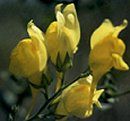
Often mistaken for a snapdragon, Dalmatian Toadflax is native to the Mediterranean and was probably introduced as an ornamental plant, but quickly spread to invade dry timber and rangelands, mostly in the intermountain west. A perennial that grows up to four feet tall, Dalmatian toadflax spreads both by seed and creeping roots.
A defoliating moth is available as a biological control agent, though its effectiveness has not yet been proven in Idaho. Herbicides are available for control of this noxious weed.
Canada Thistle
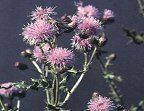
Despite the name, Canada Thistle is native of Eurasia introduced to Canada as a crop seed contaminant in the late 1700s. This noxious weed is found throughout the state, growing up to five feet tall.
Biological control agents, including the crown/root weevil, stem gall fly, seed head fly, stem boring weevil and defoliating butterfly are available, but control is considered only poor to fair.
Herbicides are also available that provide much better results if applied consistently.
Absinth Wormwood
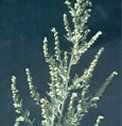
Absinth wormwood is an escaped ornamental imported from Europe, reducing available forage and tainting the milk of dairy cattle. The plant is recognizable by its strong, sage-like odor.
This noxious weed is a perennial that grows to approximately three feet in height, its leaves and stems covered with fine, silky hairs, giving the plant a grayish appearance.
Control of absinth wormwood is relatively easy, compared to other noxious weeds. Application of clopyralid, dicamba, 2,4-D, picloram or glyphosate when the plant is about 12 inches tall and actively growing (late June through mid-August) usually gives the best results. The plants should be mowed in early to mid-summer to promote active regrowth prior to fall treatment.
Leafy Spurge
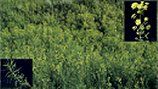
Leafy Spurge was brought to the United States from Eurasia in about 1897. A perennial weed with roots that often reach a depth of 20 feet, this plant secretes a milky latex which can produce blisters in humans and animals and can cause blindness is rubbed into the eye. Found throughout most of the state, several biological control agents, including several stem/root boring beetles, a shoot tip gall midge and a stem-boring moth are being evaluated for effectiveness, and sheep and goats have also been used to help check the rate of spread.
Herbicides are also available for control. Those who handle leafy spurge are encouraged to wear gloves and eye protection.
Field Bindweed
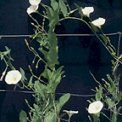
A member of the morning glory family, Field Bindweed is a Eurasian import that has spread throughout the nation, forming climbing vines up to six feet in length that often form dense mats and choke native plants and agricultural crops. This weed spreads by both seed and creeping roots, and seeds can remain viable for as long as 50 years.
There are no biological control agents that have proven effective against field bindweed, but active herbicide control methods can be. Tillage can also be effective, beginning two weeks after the plant appears and continue every two weeks through the growing season for up to three years.
Hoary Cress
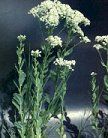
Introduced from Europe in the late 19th century, most likely in ballast used for ships, hoary cress rapidly spread inland from both the east and west coasts and is now common throughout the nation, including most of Idaho. A perennial that grows approximately three feet tall, hoary cress spreads by seed and creeping root, and is adaptable to a wide variety of environmental conditions.
There are no biological agents which have proven effective against hoary cress, though some herbicides are registered for and effective on this noxious weed.
Yellow Toadflax
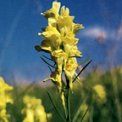
Similar to Dalmatian Toadflax, Yellow Toadflax is often mistaken for a snapdragon, though yellow toadflax originated in Europe and contains a poison often harmful to livestock. The smooth, generally unbranched stems grow to about three feet in height, its yellow flowers are about one inch long with an orange throat.
A defoliating moth, seed head weevil and flower beetle provide fair to good biological controls of yellow toadflax, and herbicides are also effective.
Noxious Weed List
|
Common Name |
Scientific Name |
|---|---|
|
Black Henbane |
Hyoscyamus niger |
|
Bohemian Knotweed |
Polygonum bohemicum |
|
Brazilian Elodea |
Egeria densa P. |
|
Buffalobut |
Solanmum rostratum |
|
Canada Thistle |
* Cirsium arvense |
|
Common Crupina |
Crupina vulgaris |
|
Common/European Frogbit |
Hydrocharis morsus-ranae |
|
Common Reed (Phragmites) |
* Phragmites australis |
|
Curlyleaf Pondweed |
* Potamogeton crispus |
|
Dalmation Toadflax |
* Linaria genistifolia ssp. dalmatica |
|
Diffuse knapweed |
* Centaurea diffusa |
|
Dyer’s Woad |
Isatis tinctoria |
|
Eurasian Watermilfoil |
* Myriophyllum spicatum |
|
Fanwort |
Cabomba caroliniana |
|
Feathered Mosquito Fern |
Azoola pinnata |
|
Field Bindweed |
* Convolvulus arvensis |
|
Flowering Rush |
Butomus umbellatus |
|
Giant Hogweed |
Heracleum mantegazzianum |
|
Giant Knotweed |
Polygonum sachalinese |
|
Giant Salvinia |
Salvinia molesta |
|
Hoary Alyssum |
* Beteroa incana |
|
Houndstongue |
* Cynoglossum officinale |
|
Hydrilla |
Hydrilla |
|
Japanese Knotweed |
* Polygonum cuspidatum |
|
Johnsongrass |
Sorghum halepense |
|
Jointed Goatgrass |
* Aegilops cylindrica |
|
Leafy Spurge |
* Euphorbia esula |
|
Matgrass |
Nardus stricta |
|
Meadow Knapweed |
* Centaurea pratensis |
|
Mediterranean Sage |
Salvia aethiopis |
|
Milium |
Milium vernale |
|
Musk Thistle |
Carduus nutans |
|
Orange Hawkweed |
* Hieracium aurantiacum |
|
Oxeye Daisy |
* Chrysanthemum leucanthemum |
|
Parrotfeather Milfoil |
Myriophyllumaquaticum |
|
Perennial Pepperweed |
Lepidium latifoliumLepidium latifolium |
|
Plumeless Thistle |
Carduus acanthoides |
|
Poison Hemlock |
* Conium maculatum |
|
Policeman’s Helmet |
* Impatiens gladulifera |
|
Puncturevine |
Tribulus terrestris |
|
Purple Loosestrife |
* Lythrum salicaria |
|
Rush Skeletonweed |
* Chrondrilla juncea |
|
Russian Knapweed |
* Acroptilon repens |
|
Saltcedar |
Tamarix |
|
Scotch Broom |
* Cytisus scoparius |
|
Scotch Thistle |
* Onopordum acanthium |
|
Small Bugloss |
* Anchusa arvensis |
|
Spotted Knapweed |
* Centaurea maculosa |
|
Squarrose Knapweed |
Centaurea squarrosa |
|
Syrian Beancaper |
Zygophullum fabago |
|
Tall Hawkweed |
Hieracium piloselloides |
|
Tansy Ragwort |
Senecio jacobaea |
|
Variable Leaf Milfoil |
Myriophyllum heterophyllum |
|
Vipers Bugloss |
Echium vulgare |
|
Water Chestnut |
Trapa natans |
|
Water Hyacinth |
Eichoria crassipes |
|
White Bryony |
Bryonia alba |
|
Whiteop |
* Cardaria draba |
|
Yellow Devil Hawkwood |
* Hieracium glomeratum |
|
Yellow Flag Iris |
Iris pseudacorus |
|
Yellow Floating Heart |
Nymohoides peltata |
|
Yellow Hawkweed |
* Hieracium caespitosum |
|
Yellow Starthistle |
Centauria solsititialis |
|
Yellow Toadflax |
* Linaria vulgaris |
Weeds of concern in Boundary County not on the State list:
|
Common Name |
Scientific Name |
|
Absinthe Wormwood |
Artemesia absinthium |
|
Common Tansy |
Tanacetum vulgare |
|
Kochia |
Kochia scoparia |
|
Queen Anne’s lace (wild carrot) |
Daucus carota |
|
Common mullein |
Verbascum thapus |
|
Horseweed |
Conyza Canadensis |